Keeping tk999 Inside the Day, Not the Night
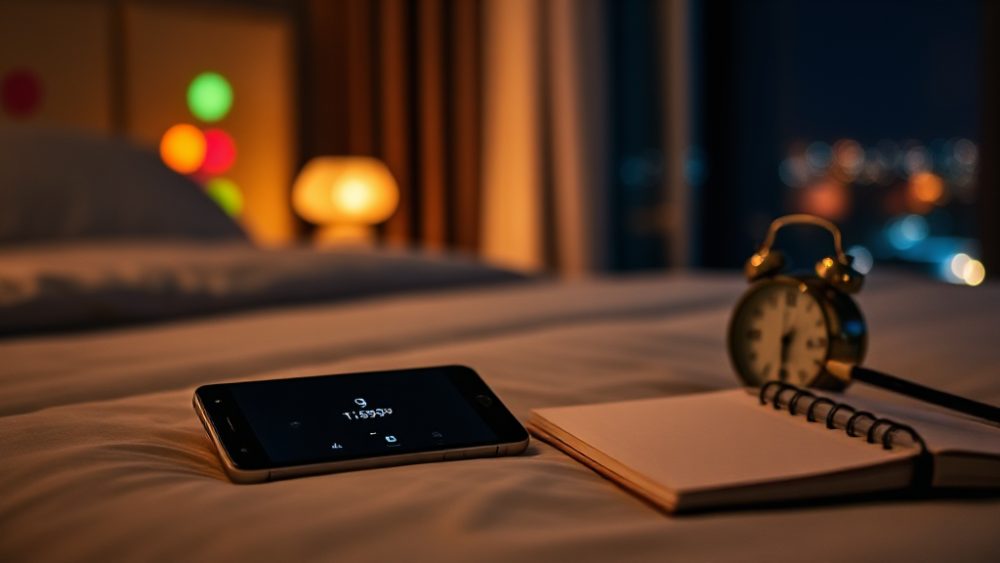
It is 1 a.m., and the phone is still glowing. Nobody planned this. There was no decision to stay up, no moment of choosing to keep going — just one more look, then another, until the room went dark and the clock quietly passed midnight. If that scene feels familiar, the question worth asking is not why you were on tk999 at that hour, but how the session got there without anyone deciding it should.
This article is about time, not outcomes. It looks at the late-night drift that pulls betting sessions past bedtime, then offers a handful of scheduling habits that keep activity inside daylight hours. The goal is simple: let the platform fit around your day instead of quietly replacing the end of it.
How a Session Drifts Past Bedtime
Late-night drift rarely starts late. It usually begins in the evening, during a gap that feels harmless — after dinner, before a shower, while waiting for a message. One quick check becomes a scroll, the scroll becomes a browse, and the browse becomes a session. By the time tiredness arrives, the habit is already ahead of the intention.
The mechanism is not mysterious. A mobile app removes friction: no commute to a venue, no closing time, no visible cue that the day has ended. The absence of a natural stopping point is what makes the drift possible. In a physical setting, closing hours do the boundary work for you. On a phone, that work has to be done deliberately.
There is also a fatigue effect. Decisions made after a long day are slower and looser, and the mind is less willing to interrupt something already in motion. That is why the same person who sets a limit at 8 p.m. can ignore it at 12:30 a.m. The limit did not fail; the timing did.
Why Mornings Feel Different
Most people who move their activity earlier report the same thing: mornings feel clearer, and the rest of the day feels less crowded. Part of this is biological — alertness is higher after sleep, so choices are made with more attention. Part of it is structural: daytime has built-in interruptions such as work, meals, and errands, and those interruptions act as natural session breaks.
Night has none of that scaffolding. Once the household goes quiet, nothing external signals that it is time to stop. Daylight provides boundaries that late night quietly removes. Putting a session in the morning or early afternoon borrows those boundaries for free.
There is a practical consequence too. A session that ends by mid-afternoon leaves the evening intact for rest, which in turn makes the next morning easier. The benefit compounds, and it compounds in the direction of better sleep rather than shorter sleep.
Five Scheduling Habits That Actually Hold
Advice to “be disciplined” rarely survives contact with a tired evening. Habits work better when they are mechanical — tied to a time, a place, or a device setting rather than to willpower. The five below are chosen because each one creates a visible stopping point.
1. Give the session a start and an end, not just a start
Most people plan when they will begin and leave the end open. Reverse that. Decide the finish time first, then work backwards. A session with a defined end is far easier to close than one that simply runs until interest fades.
2. Use a daytime window and treat it as the only window
Pick a block — say, early afternoon — and treat anything outside it as closed. The narrower the window, the less room there is for a session to expand into the evening. Registration and app access on tk999 are available whenever you choose to use them, which makes the choice of window entirely yours to set.
3. Put a physical barrier between the phone and the bed
Charging the phone in another room is unglamorous and effective. It removes the option before tiredness can argue for it. If the phone must stay nearby, disable notifications for the app during night hours so the screen does not invite a check.
4. Schedule a wind-down that does not involve a screen
A session often fills empty time rather than chosen time. Replace the last hour of the evening with something that has its own shape — reading, a walk, a call — so the evening has a destination other than the phone.
5. Review the week, not the night
Judging a single late night is noisy. Looking at a week shows the pattern: which evenings drift, and what happened just before. That pattern is where the fix lives, because it points to the trigger rather than the symptom.
Common Mistakes That Undo Good Intentions
The most common mistake is relying on memory. A limit that exists only in your head is not a limit; it is a hope. Write the window down, set it as a reminder, or use the app’s own time controls so the boundary exists outside your attention.
The second mistake is negotiating. “Just five more minutes” is the sound of a boundary dissolving, and it usually happens at exactly the hour when judgment is weakest. A boundary that can be renegotiated in the moment is not a boundary. Treat the end time as fixed and the negotiation as the warning sign.
The third is overcorrecting. Some readers respond to a late night by banning the activity entirely for a week, then returning with no structure at all. A steadier approach is to keep the same daytime window and simply shorten it. Consistency is what makes a schedule stick; intensity is what makes it collapse.
A fourth, quieter mistake is ignoring sleep debt. If you are already short on rest, evening self-control is the first thing to go. Fixing the sleep schedule often fixes the drift without any further effort.
Frequently Asked Questions
Why do sessions on tk999 tend to run late even when I plan otherwise?
Because the evening lacks natural stopping points. Without a closing time or a physical cue, a session continues until something interrupts it. Setting an explicit end time and a device barrier replaces the missing cue.
Is it better to bet in the morning or the afternoon?
Either works, as long as the window is fixed and ends well before the evening. Mornings suit people who want the day’s decisions made early; afternoons suit people whose mornings are already full. The key is a consistent window, not a perfect one.
How long does it take for a daytime schedule to feel normal?
Most people notice a difference within a week or two, mainly because sleep improves first. The habit itself takes longer, so expect the first few evenings to feel odd and plan a substitute activity for that hour.
What should I do if I slip back into late-night use?
Look at what happened just before the slip rather than at the slip itself. A missed meal, a stressful day, or an unstructured evening usually explains it. Adjust the trigger, keep the window, and avoid turning one late night into a new pattern.
Does using the app on a phone make late-night drift more likely?
Yes, because the phone is already in the bedroom and requires no decision to open. Moving the charger out of the room or muting the app at night removes the easiest path back into a session.